
Roman Cyberpunk: 4K Prompts & Art Direction Breakdown
Melding Classical Antiquity with gritty dystopian futurism is notoriously tricky in modern diffusion models. Most default runs spit out gaudy neon centurions that feel like cheap Halloween party costumes or cluttered chrome statues with no environmental depth. The real friction lies in balancing brutalist travertine stone, Corinthian marble orders, and imperial brass against rain-slicked fiber optics and industrial heat shimmer without washing out the historical gravity.
Over several hundred test generations in Midjourney v6 and Stable Diffusion XL, I discovered that grounding the frame in tangible classical architectural logic before introducing high-frequency tech artifacts is what separates museum-grade concept keys from plastic AI soup. When you enforce tactile weathering on ancient materials and treat neon strictly as ambient environmental contamination rather than main key fill, Roman cyberpunk transforms into an arresting, grounded subgenre.
1. Neo-Subura: Rain-Slicked Plebeian Alleyways
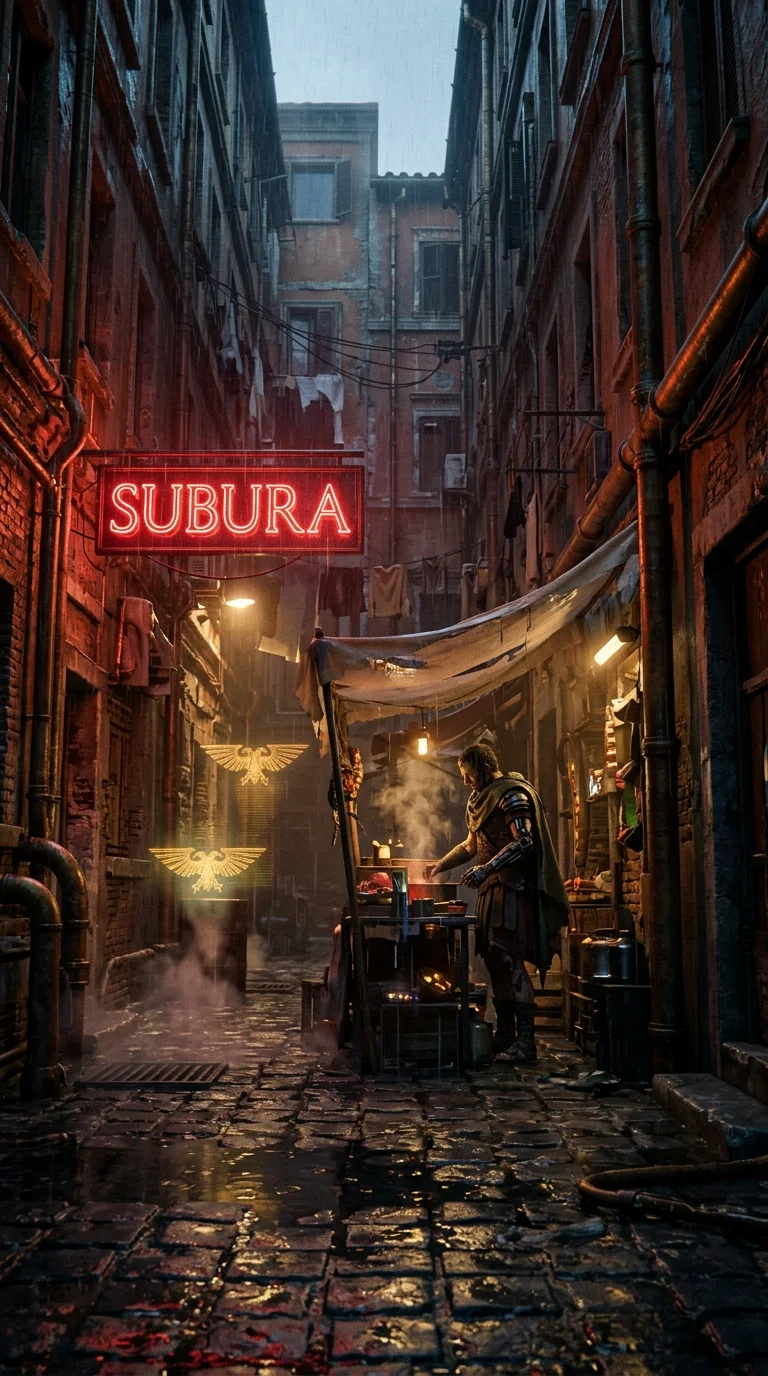
The Subura was ancient Rome's most notorious slum—dense, multi-tiered, and prone to fires. In a cyberpunk translation, this converts into towering tenement blocks where weathered terracotta roof shingles collide with exposed high-voltage conduits, holographic Latin graffiti, and steamy food stalls vending synthetic garum. To keep the shot grounded, contrast the matte, porous texture of eroded Roman brickwork against the sharp, specular reflections of dirty rainwater pooling in uneven basalt cobblestones.
For lighting, kill your flat white studio passes. Use low-slung crimson paper lanterns and flickering amber tube lights to mimic ancient torchlight while cutting through the drizzle with cold cyan volumetric light spill from distant corporate obelisks. Frame this through an anamorphic 35mm lens at a slightly low angle; it accentuates the oppressive claustrophobia of stacked archways while giving your focal character—a cyber-augmented gladiator or black-market courier—monumental physical presence.
2. Curia Solaris: High-Imperial Senate Chamber
Moving from the gutters to the pinnacle of power, the Imperial Senate requires an atmosphere of imposing architectural austerity. Think Italian Rationalism combined with high-tech panopticon surveillance. Massive monolithic columns carved from Carrara marble support soaring coffered vaults, while floating holographic senatorial rosters cast geometric cerulean halos across polished porphyry floors. The scale should evoke imperial dominance, dwarfing the robed figures gathered on concentric amphitheater seating.
Lighting here demands pristine discipline rather than street grime. Rely on harsh, directional sunlight lancing through a colossal oculus—reminiscent of the Pantheon—mixed with precise laser-thin volumetric light shafts from suspended diagnostic drones. Lock the camera to a symmetrical wide-angle 24mm perspective at chest level; this geometric rigidity mirrors the authoritarian order of the Roman political machine.
3. The Cyber-Colosseum: Bloodsport Under Industrial Megastructures
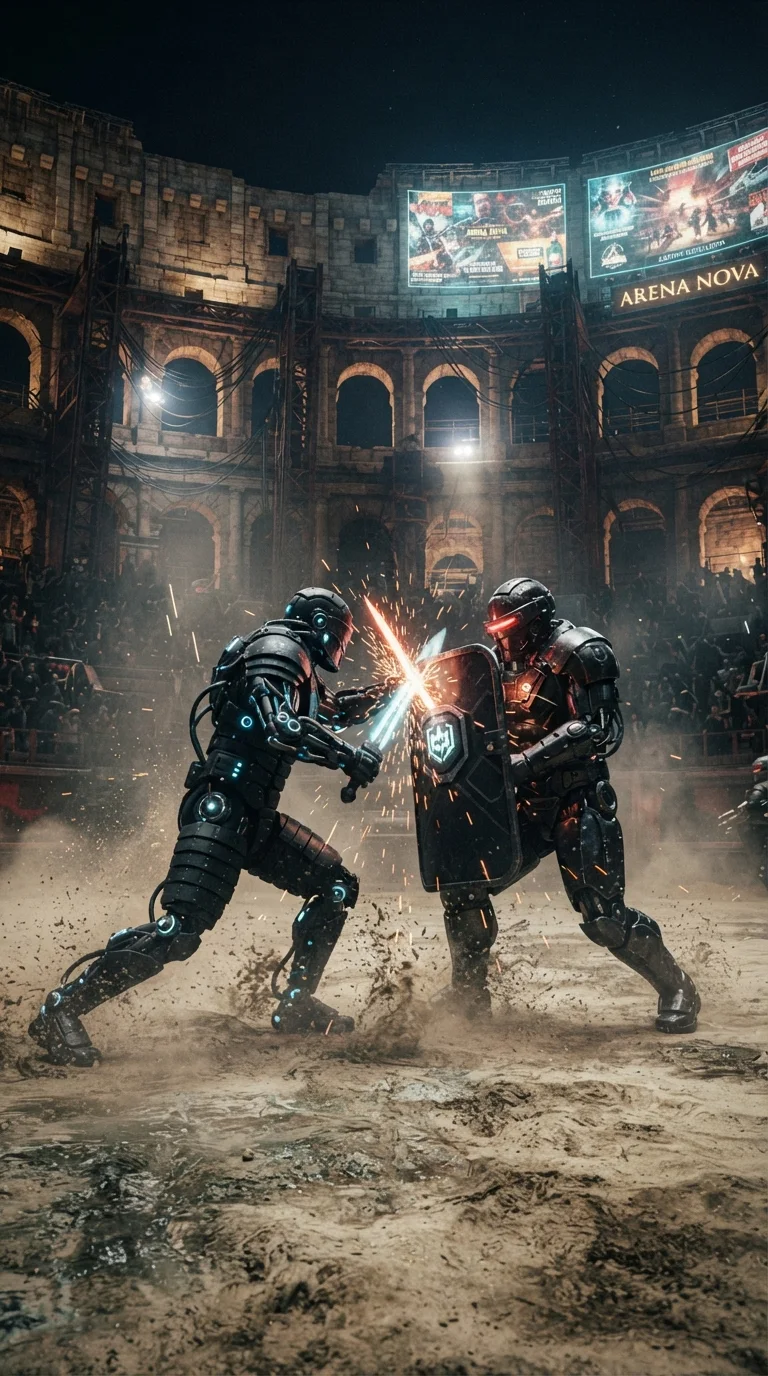
The Roman amphitheater reimagined as an electrified combat arena is where classical sport collides with cutthroat mechanical engineering. Envision the iconic travertine arcades retrofitted with industrial scaffolding, giant multi-story LED jumbotrons broadcasting fighter telemetry, and kinetic sand arenas concealing subterranean hydraulic pits. Sand is critical here: its gritty, dry physical texture grounds the synthetic cybernetic limbs and sparking power-swords of modern retarii in raw, visceral dirt.
To capture dynamic tension, pull the camera to a dramatic Dutch tilt or a 50mm medium tracking shot just behind a fighter's shoulder. Light the scene with stadium floodlights cutting through rising dust, contrasted against orange particle sparks from clashed vibro-blades. The key is balance: if every surface glows, nothing feels heavy. Let deep architectural shadows swallow the upper tiers of the arena while keeping the blood-and-iron struggle pin-sharp in the foreground.
Bringing It All Together
Dialing in the balance between ancient stone and synthetic circuitry takes a bit of prompt discipline, but when you respect the tactile contrast between marble, brass, and fiber optics, the results stand out in any portfolio. Fire up these exact prompts on Dreamixel, tweak the focal lengths and lighting tags to fit your project's mood, and start crafting worlds where antiquity never fell—it just upgraded.