
Ghost Pumpkin Carving: 4K Aesthetics & AI Prompt Guide

Every October, generative feeds get flooded with the same derivative jack-o'-lantern tropes: flat orange lighting, plastic-looking rind textures, and generic cartoon grins. The ghost pumpkin aesthetic breaks away from that entirely. When you pivot to heirloom ghost varieties—like Lumina, Casper, or Valenciano white gourds—and pair them with specter silhouettes, porcelain-toned flesh, and cool bioluminescence, you suddenly enter high-end dark fantasy territory. The translucent parchment rinds diffuse light in ways standard field pumpkins never could, producing an eerie, museum-grade subterranean glow.
Getting neural models to render this convincingly without blowing out highlights or muddying internal shadows requires deliberate camera setups and disciplined lighting syntax. Standard prompts collapse into muddy gray paste because diffusion models struggle with subsurface scattering on pale surfaces against dark backdrops. Below, I break down three tested aesthetic directions from my production sketchbook, complete with the camera gear, atmospheric parameters, and exact prompt formulas needed to hit crisp 4K fidelity on your first run.
1. Ethereal Porcelain Specter in a Gothic Moonlit Conservatory
This setup relies on stark value contrast and delicate material physics. We treat the gourd like translucent bone china rather than squash meat. The carve depicts a diaphanous, floating specter silhouette with fluid trailing ribbons etched halfway through the rind rather than punched straight out. This technique—shallow relief carving—allows an interior cyan-white candle to cast gradient glows across differing gourd thicknesses. The ambient fill comes from high-angle silver moonlight streaming through vintage Victorian wrought-iron skylights, catching damp moss and cracked limestone pavers below.
Optically, keeping the depth of field shallow via an 85mm prime lens prevents background architectural noise from competing with the carve. The key is balancing the cool 5600K exterior rim light against an internal 4200K pale candle glow, preventing the white rind from blowing out to pure clipped white. Textural micro-detail on the stem—dry fiber grooves, dust, and curling dried tendrils—grounds the ethereal character in physical reality.
2. Bioluminescent Deep-Woods Apparition with Floating Will-o'-the-Wisps
Moving deep into an ancient, wet forest shifts the color story toward rich verdigris greens, pitch blacks, and neon cyan accents. Here, the pumpkin carving embraces organic decay: split rinds, knotted vine tendrils wrapping the exterior, and a negative-space phantom visage that feels as though a restless spirit is physically manifesting through the gourd's face. The lighting engine is dual-source: an intense cobalt interior heart illuminating the hollow cavity, accompanied by small, hovering will-o'-the-wisp embers floating around the perimeter to add dimensional foreground bokeh.
From a composition standpoint, wide-angle environmental portraiture at 35mm captures the low-angle perspective, making a tabletop-scale gourd feel imposing and totemic. The ground plane features dark wet loam, glistening rain droplets, and decaying shelf mushrooms that catch an emerald edge bounce. By locking down the contrast between deep black forest shadows and vivid cyan highlights, the final output maintains pristine edge clarity without clipping.
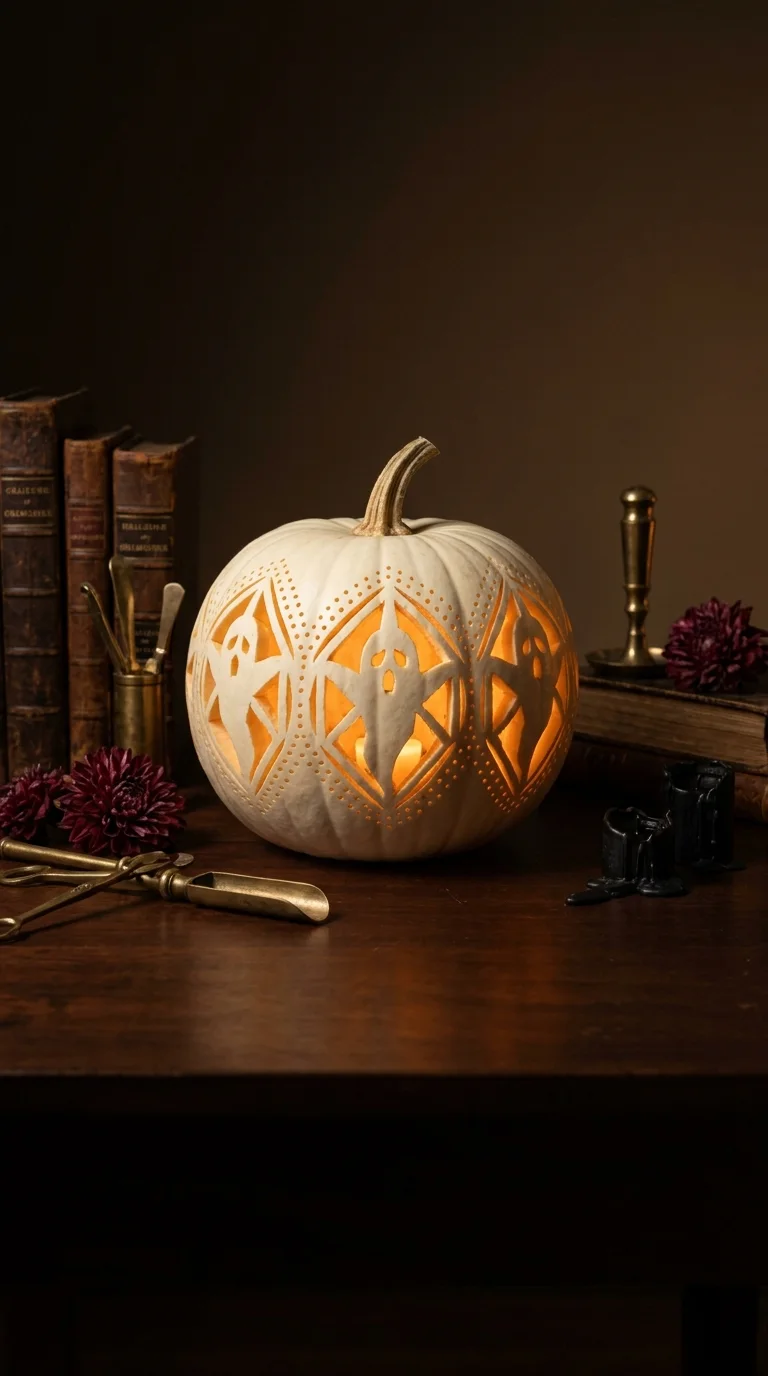
3. Minimalist Dark-Academia Candlelit Still Life
For a refined, high-end editorial feel, this direction marries seventeenth-century Dutch Golden Age chiaroscuro with dark academia styling. The white pumpkin is carved with clean, geometric specter contours—sharp negative cuts paired with micro-stippled pinprick constellations that leak needle-sharp light beams. Instead of damp outdoor fog, the setting is an opulent library desk loaded with dark antique leather tomes, dried botanical specimens, antique brass calipers, and melted dark beeswax candles.
The visual power comes from strict directional lighting: a single off-axis tungsten flame source creating long, painterly shadows across warm mahogany grain. The white skin of the pumpkin takes on buttery ivory highlights and amber undertones while maintaining its signature pale identity. This scene tests a generator's ability to render complex material interactions—brass reflections, cracked vellum parchment, velvety pumpkin rind, and optical caustics through old apothecary bottles.
Bringing It All Together
Dialing in these ghost pumpkin concepts comes down to respecting physical light behavior—subsurface scattering, controlled color temperature, and tactile surface finishes. Run these exact prompts through Dreamixel, experiment with your negative weightings to eliminate generic orange squash tones, and watch your seasonal outputs transition from cliché clip art into portfolio-grade dark fantasy artwork.